To view the technical documents, please fill out the form below. We will get back to you as soon as possible and you can log in and review with the password given by us. If you have a password, you can log in and continue by clicking "Sign In".
You can access the documentation by logging in from this area with the password given to you.
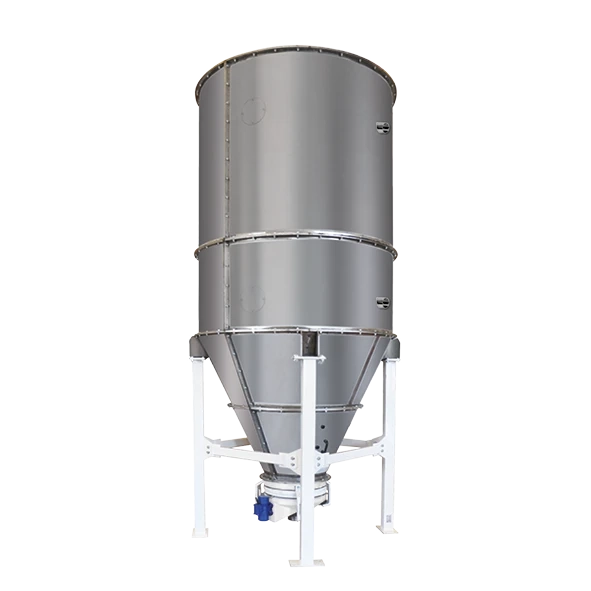
Roll-feed station with integrated level sensor
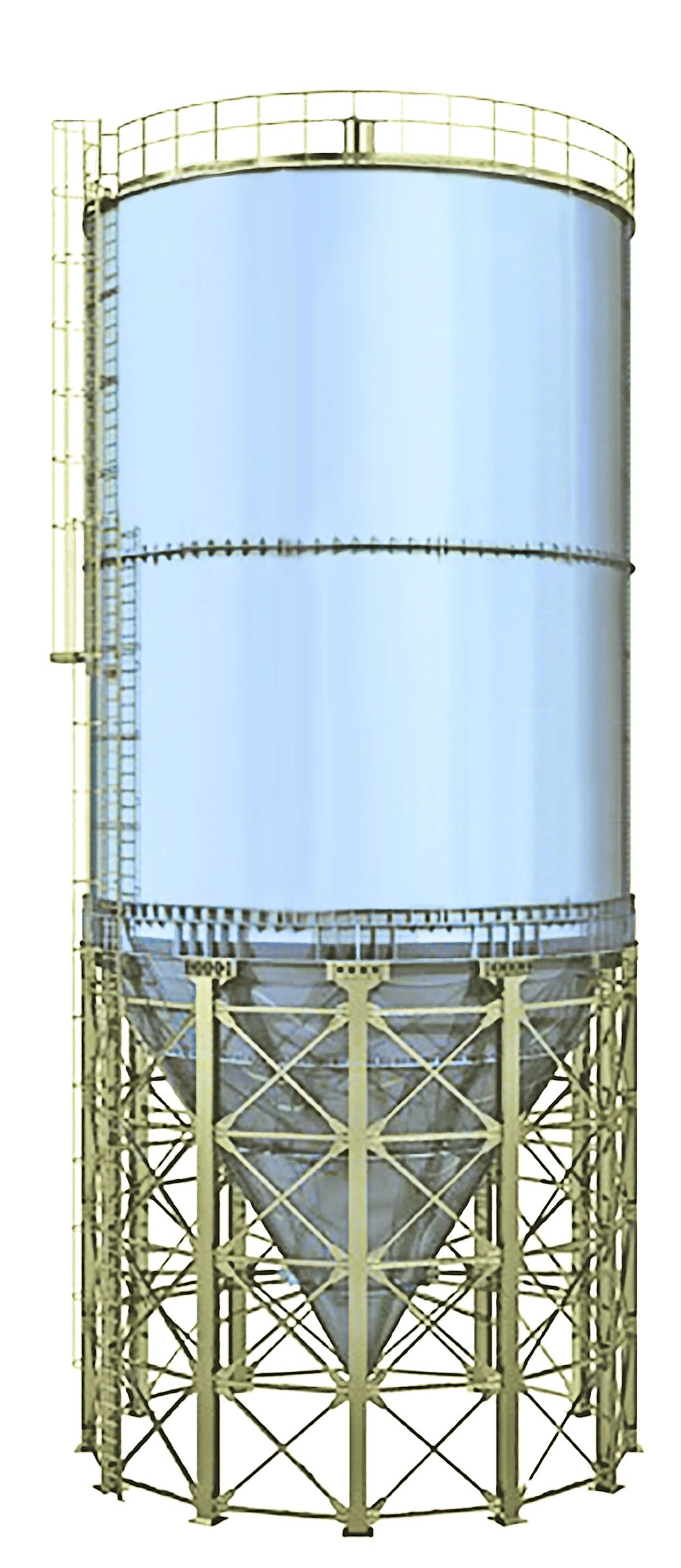
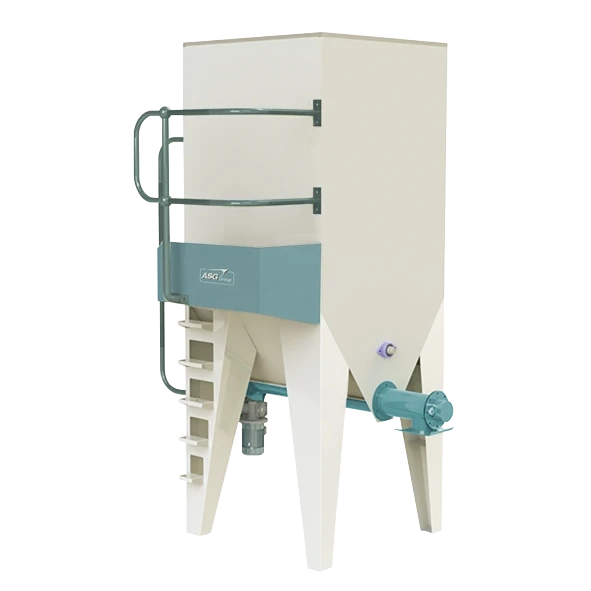
High-strength, modular-bodied steel intermediate silos positioned directly above the roller mills — the most critical milling station of flour and semolina mills. Collecting in themselves the wheat mass fully cleared of foreign matter and having completed the tempering process, they feed the rolls (roller cylinders) uninterruptedly with the continuous, balanced and uniform product curtain they need.
WORKING PRINCIPLE
Steel storage of tempered, sterile raw material — conditioned-grain reception: the final grain mass, having passed the cleaning and tempering units and been cleared of foreign matter, is taken in through the roll bin’s upper inlet lines; the high-sheet-quality steel body safely stores the product as the last station before the rolls. Final moisture-analysis option and level automation — moisture and flow monitoring: the bin design allows the grain’s moisture content to be checked one last time before entering the milling phase and samples to be analysed; the smart level sensors integrated on the body measure the material volume inside instantly and signal the plant’s central automation system. Balanced non-forced gravity discharge — stable continuous roll injection: thanks to the lower-flow regimes commanded by the level-sensor data, the roller mill’s feed chamber is always kept at the most ideal fill ratio; the grain flows to the rolls by gravity at an uninterrupted, clog-free, uniform rate.
KEY ADVANTAGES
- Continuous, uninterrupted roll-feed assurance: Efficient milling on the roller mills depends on the product curtain at the feed gate staying continuous and at the same height; the roll bin absorbs the in-line flow fluctuations with its own volume and reliably prevents the rolls from running empty or blocking from overload.
- Full automation control via smart sensors: Through the lower and upper level sensors it automatically regulates the raw-material flow; depending on the silo’s fill ratio it switches the upper conveying lines (screws, elevators or chain conveyors) on and off, optimising energy.
- Final quality control and moisture-regime tracking: It has an ergonomic body geometry allowing the wheat moisture — the most sensitive parameter of the milling process — to be observed, measured and sampled one last time before entering the break rolls.
- High-rigidity industrial steel chassis: A strong body design made of sealed-welded or modular bolted steel plates that bears the static and dynamic loads of the tonnes-heavy grain mass without creating parasitic vibration on the roller mill’s body.
- Volume and capacity options to suit the plant diagram: It is custom-designed and made in a wide variety of volume and capacity options to fully suit the plant’s hourly crushing/milling capacity, passage structure and the storey-height limits of the mounting area.
ENGINEERING NOTE
The over-roll bins are a flow stabiliser (buffer tank) directly affecting, in modern flour milling, milling stability and the standardisation of the flour’s ash/baking values. The bin’s lower cone angle is calculated with engineering precision to values that prevent the grain from rubbing against the walls and bridging and that do not disrupt the FIFO (“first in, first out”) logistics principle. The millisecond synchronisation of the level sensors with the automation (PLC) permanently prevents the mechanical shocks and overheating that could occur on the roll cylinders and contributes to the plant’s overall specific electricity-consumption index.
 TR
 RU
 ES