To view the technical documents, please fill out the form below. We will get back to you as soon as possible and you can log in and review with the password given by us. If you have a password, you can log in and continue by clicking "Sign In".
You can access the documentation by logging in from this area with the password given to you.
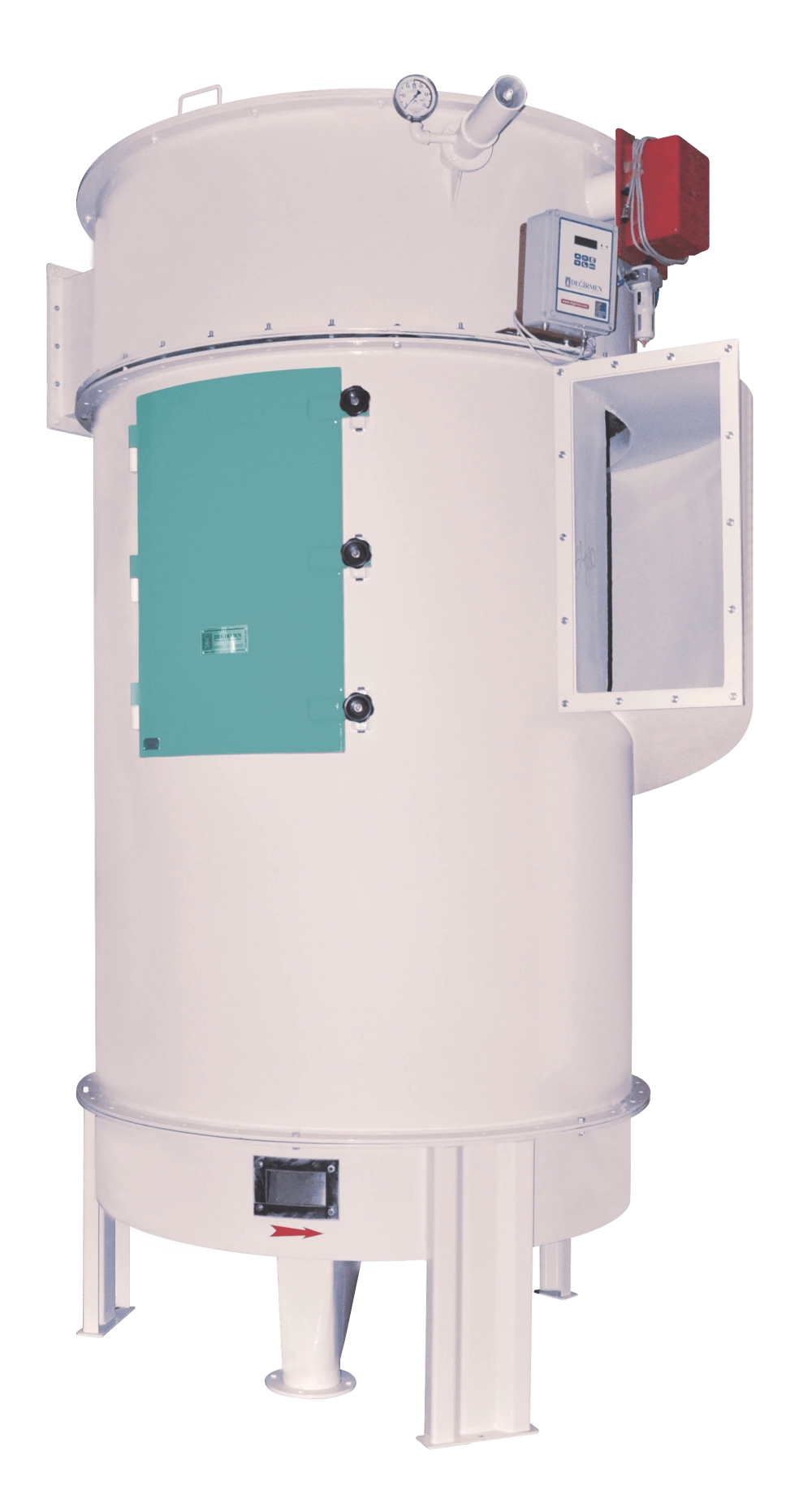
Uninterrupted aspiration after the reverse-jet / jet-pulse cycle
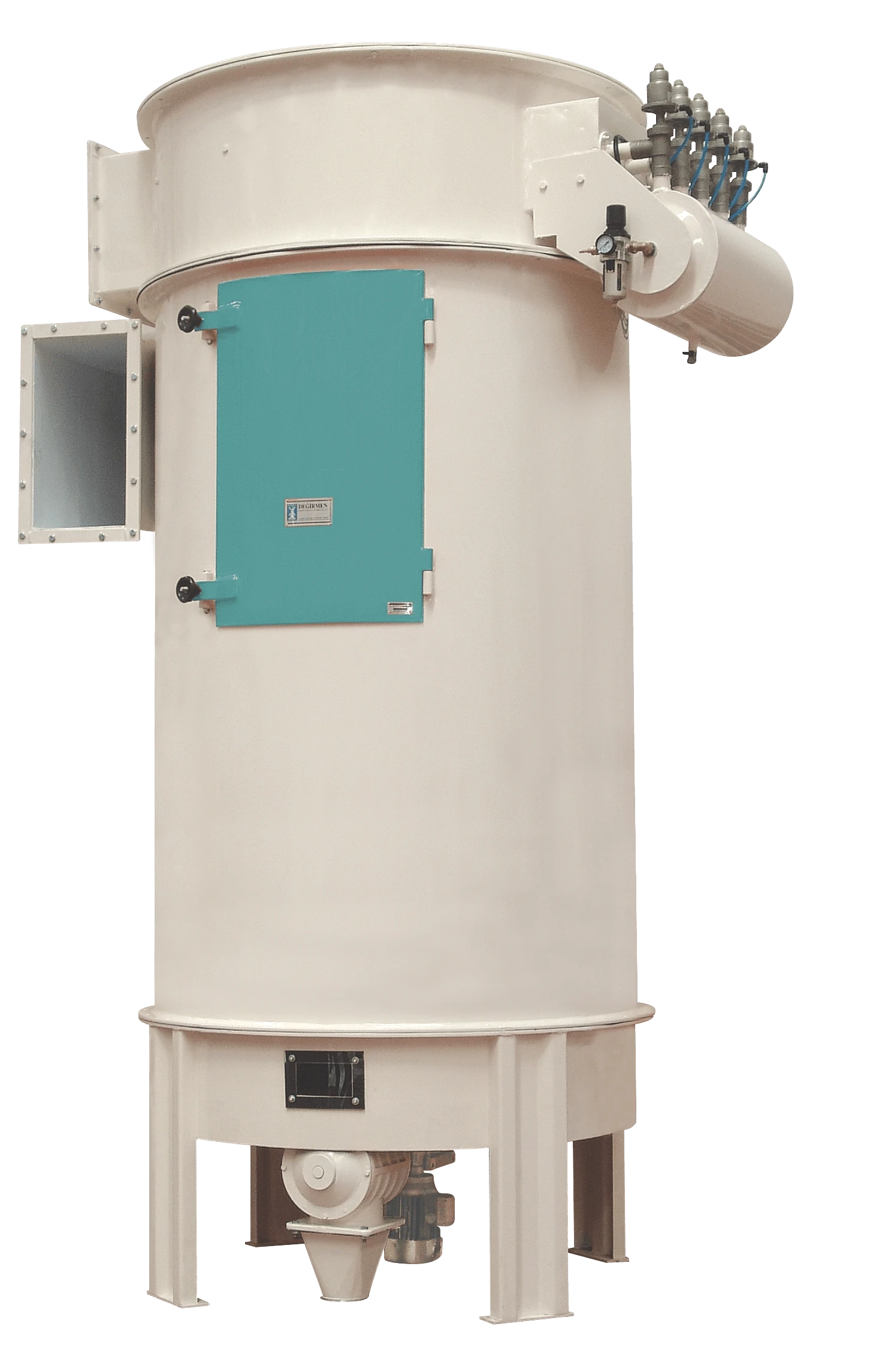
A high-performance industrial filtration unit for separating the air-dust mixture in the pneumatic conveying lines and internal aspiration systems of flour, semolina and feed mills: it retains valuable micronised particles and safely exhausts cleaned air through the stack. Running stably in both vacuum and pressure systems, the rubber-diaphragm filter delivers maximum environmental sanitation and product recovery, especially on lines requiring low working pressure (blower) and high air flow.
WORKING PRINCIPLE
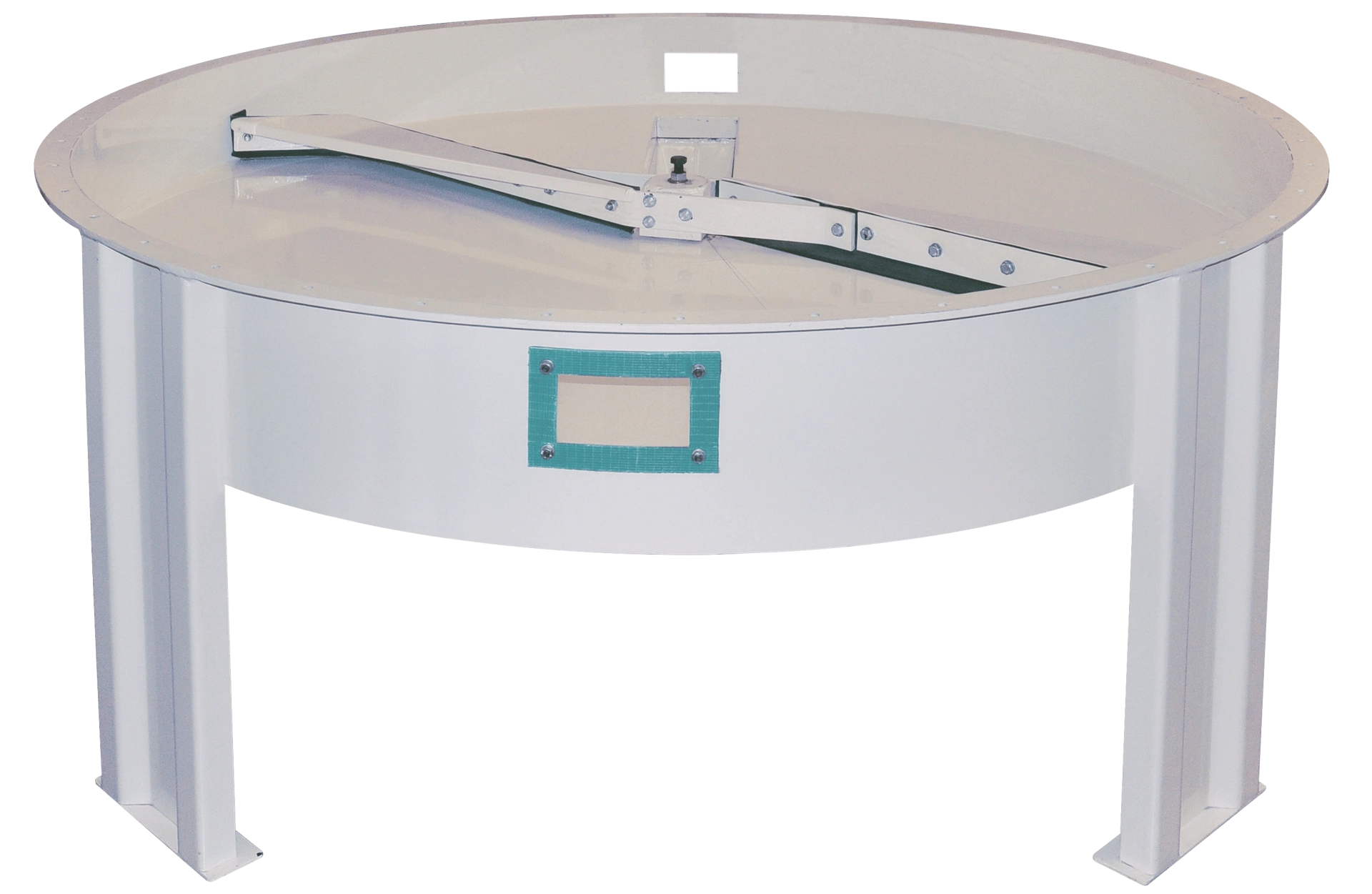
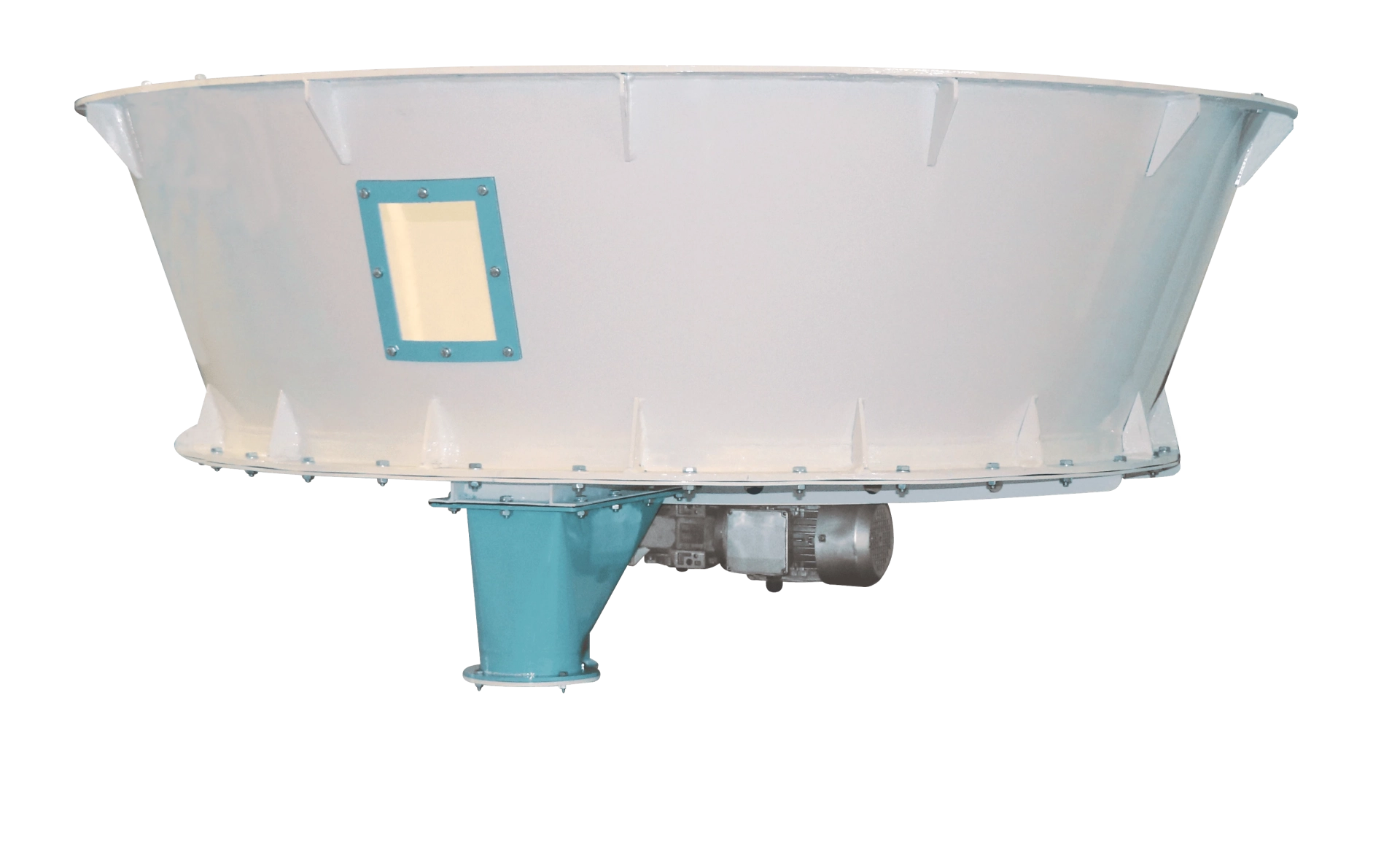
Cylindrical body and centrifugal direction — cyclonic pre-separation: the dense dust-air mixture entering the chamber gains a circular acceleration from the cylindrical design; the large, high-specific-gravity dust molecules are flung to the wall by centrifugal force and directed down into the collection cone. High-permeability bag matrix — micro-particle filtration: the microscopic airborne flour and dust particles that escape the cyclone effect are held on the outer surface of the bags, while the fully cleaned air passes through the bags and is exhausted to the stack from the upper clean-air chamber. Rubber-diaphragm accumulation — low-pressure, high-volume pulsing: to prevent the pores from clogging, special flexible rubber diaphragms engage under smart electronic-timer control; air from the blower (low pressure / high flow) is sent into the bags through the large-area diaphragms as a sudden, high-volume reverse-flow shock — this wide-amplitude shaking keeps the bag pores at maximum permeability without wearing them out.
KEY ADVANTAGES
- Integrated low-pressure air receiver: Thanks to the original large-volume air receiver built as one piece with the filter body, no separate receiver or complex piping is needed; the volumetric storage that low-pressure air requires is solved inside the body, saving space.
- Maximum bag life via rubber diaphragm: Instead of the aggressive, high-pressure “stabbing” pulses of compressor systems, the volumetric, gentle reverse air flow of the rubber diaphragms is used; the bags are not mechanically battered and bag-replacement costs are minimal.
- Wide flow spectrum: Depending on dust concentration it filters continuously across an air-flow range of 2.5 to 800 m³/min without compromising stability or suction power.
- Energy saving via blower integration: The system can be fed from the plant’s central blower line instead of costly compressor air; air consumption is optimised and the plant’s overall energy use and operating costs are cut at the most radical level.
- Technical operating parameters: Working pressure 0.3–0.5 bar (high-volume, flawless shaking in the low-pressure / blower regime); air-consumption index 35–40 N.L/bag·min (optimised low-pressure consumption and permanent energy saving); capacity 2.5–800 m³/min (from small local lines to large central aspiration systems).
ENGINEERING NOTE
The rubber-diaphragm filter is the economical peak of air management and uninterrupted process flow. The artificial cyclone effect of the cylindrical body removes up to 70% of the dust load from the bags. Running at low pressure of 0.3–0.5 bar instead of a compressor, the diaphragm mechanism protects the bag fabric’s fibre structure from high-pressure deformation and doubles its life. The diaphragm-opening frequency, set to the millisecond by a digital PLC timer, reliably prevents the static-pressure fluctuations and line stoppages that could clog pneumatic conveying pipes.
 TR
 RU
 ES